
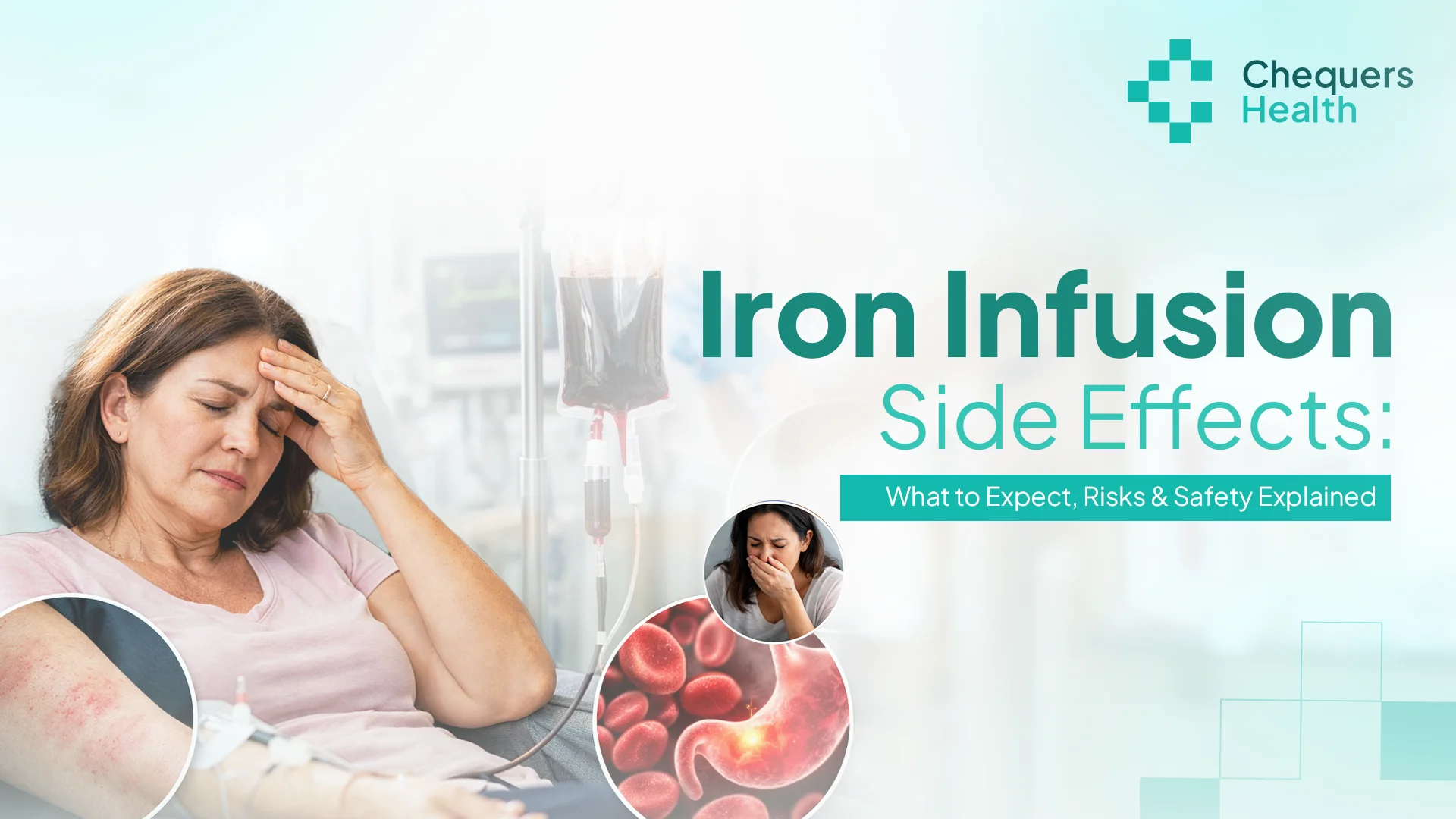
Iron Infusion Side Effects: What to Expect, Risks & Safety Explained
If you’ve been recommended for an iron infusion treatment, you may have some concerns about the side effects that may occur during or after the procedure. It is perfectly normal to have some concerns before undergoing any type of medical procedure. The good news is that the side effects that may occur during an iron infusion treatment are normally mild, temporary, and easy to manage. Severe side effects are also extremely rare with the new methods of treatment that have been developed.
Are Iron Infusions Safe?
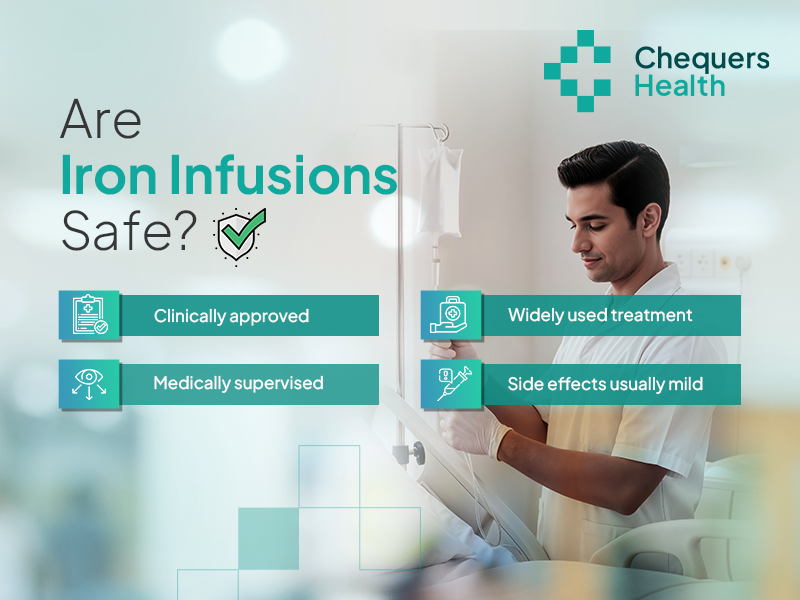
A common question people ask is: “Is it safe to have an iron infusion?” The answer is “Yes,” as it is being used to treat iron deficiency and anemia in many hospitals and clinics around the world.
Iron infusion today is much safer compared to the past, as it has a low chance of causing side effects. The patient is closely monitored during the procedure, and any side effect or discomfort is quickly identified and treated.
Common Iron Infusion Side Effects
Most patients experience little to no discomfort. However, some mild iron drip side effects may occur, especially during or shortly after the infusion.
- Headache – A mild headache may occur but usually settles quickly
- Nausea – Temporary and generally resolves on its own
- Dizziness – Slight light-headedness, especially during the first session
- Muscle or joint pain – Mild aches that typically disappear within a day or two
- Temporary taste changes – A metallic taste in the mouth is sometimes reported
- Injection site discomfort – Mild redness, swelling, or tenderness
These iron infusion side effects are usually short-lived and improve within a few hours to a couple of days without any treatment.
Less Common & Rare IV Iron Risks
Although uncommon, some IV iron risks can occur. These are carefully monitored in clinical settings.
Less Common Side Effects:
- Low blood pressure – May cause brief dizziness during the infusion
- Flushing – A warm sensation or redness, especially on the face
- Skin staining – Rarely happens if iron leaks into surrounding tissue
Rare but Serious Reactions:
- Allergic reactions – Symptoms may include itching, rash, or swelling
- Anaphylaxis (very rare) – A severe allergic reaction requiring immediate care
It’s important to understand that clinics are fully equipped to handle these situations. Medical teams are trained to respond instantly, ensuring patient safety at all times.
What Happens If You Have a Reaction?
If you are experiencing any iron infusion reaction, you are in good hands because the medical team will attend to you promptly. They can slow down or stop your infusion, depending on the symptoms you are experiencing.
Your vital signs are closely supervised, which ensures that even a rare reaction can be attended to promptly in case you are experiencing any symptoms.
How to Minimise Iron Infusion Side Effects
You can take simple steps to reduce the likelihood of side effects and make your experience more comfortable:
- Stay well hydrated before and after
- Eat a light meal before to avoid dizziness
- Inform your doctor about allergies or medical history
- Rest after the infusion and avoid heavy activity.
These precautions can significantly help minimise iron drip side effects.
Iron Infusion vs Oral Iron Side Effects
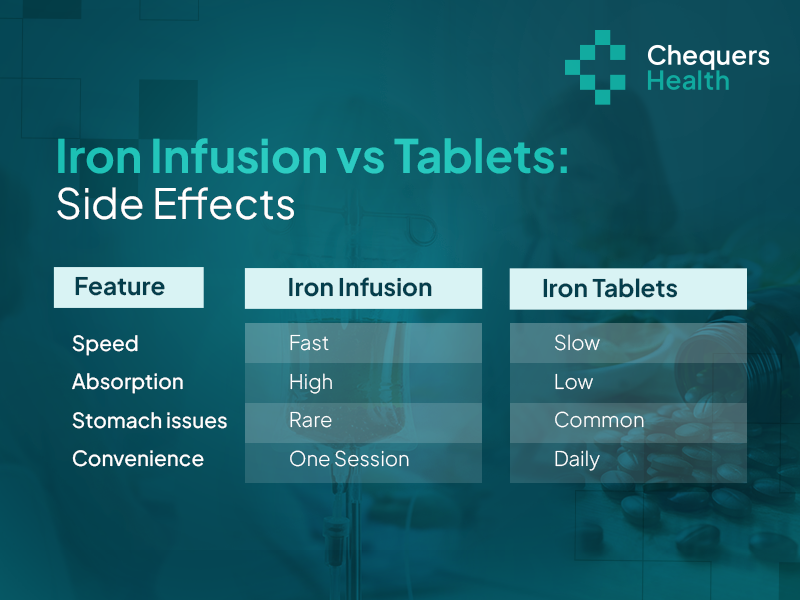
When comparing treatments, iron infusions are often better tolerated than oral supplements.
Oral iron tablets may cause:
- Constipation
- Stomach pain
- Bloating
Iron infusions:
- Work faster to restore iron levels
- Cause fewer gastrointestinal issues
- Are ideal for those who cannot tolerate tablets
For many patients, iron infusions provide a more effective and comfortable alternative.
When to Seek Medical Advice
While serious complications are rare, you should seek medical attention if you experience:
- Difficulty breathing
- Severe rash or swelling
- Chest pain
These symptoms are uncommon but require prompt medical care.
Iron infusions have been found to be a safe and effective method of treatment for those suffering from iron deficiency. Even though there are side effects of iron infusions, they are minor and temporary.
The risk of severe side effects of IV iron infusions is very low due to current safety regulations and medical expertise.
Related Articles
Iron Infusion vs Blood Transfusion – Which Is Best for Iron Deficiency?
When you’re told you’ve got low iron, it’s normal to wonder if you’ll need a blood transfusion or just an iron drip. In Bolton, most people with iron deficiency get sorted out with an infusion